
Unwritten Heroes: The American Pilot
Who Shot Down a U.S. Plane to Save It

Part of the Unwritten Heroes Series – Real WWII Stories That Defy Expectations
The Story of Lt. Louis Curdes and the P-51 Mustang “Bad Angel”
Most war stories follow a familiar arc—daring missions, heroism under fire, or the long road home. But every so often, a tale emerges that flips the script. This is one of those stories.
In February 1945, Lt. Louis Edward Curdes—a decorated U.S. Army Air Forces pilot—made a decision so unthinkable it earned him a place in military history: he deliberately shot down an American plane. And he was celebrated for it.
From Ace to POW to Legend
Louis Curdes wasn’t just any pilot. By the time he arrived in the Pacific Theater in 1945, he had already flown P-38 Lightnings in North Africa and Italy, where he became an ace in just two missions. He shot down German and Italian fighters, crash-landed near Salerno, and was taken prisoner by the Italians—only to escape months later and make his way back to Allied lines near Monte Cassino.
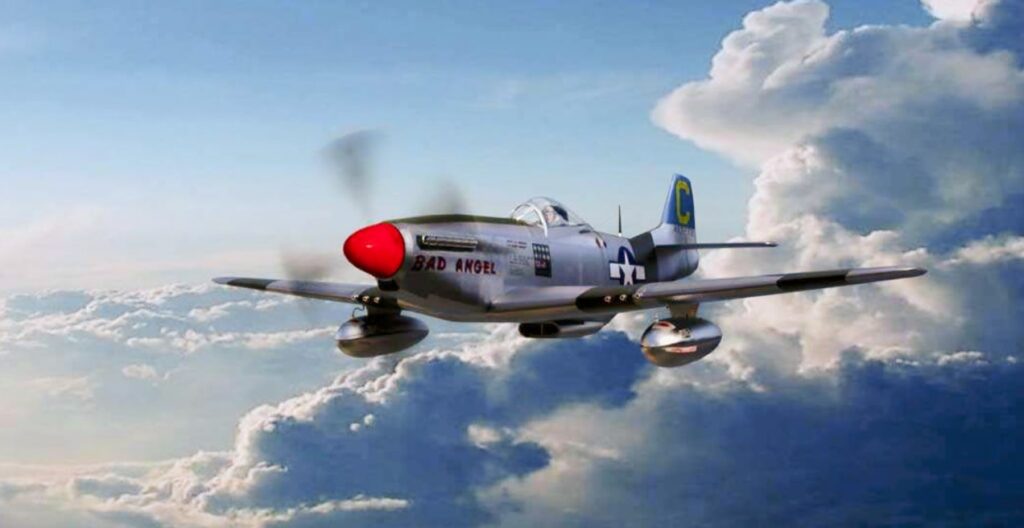
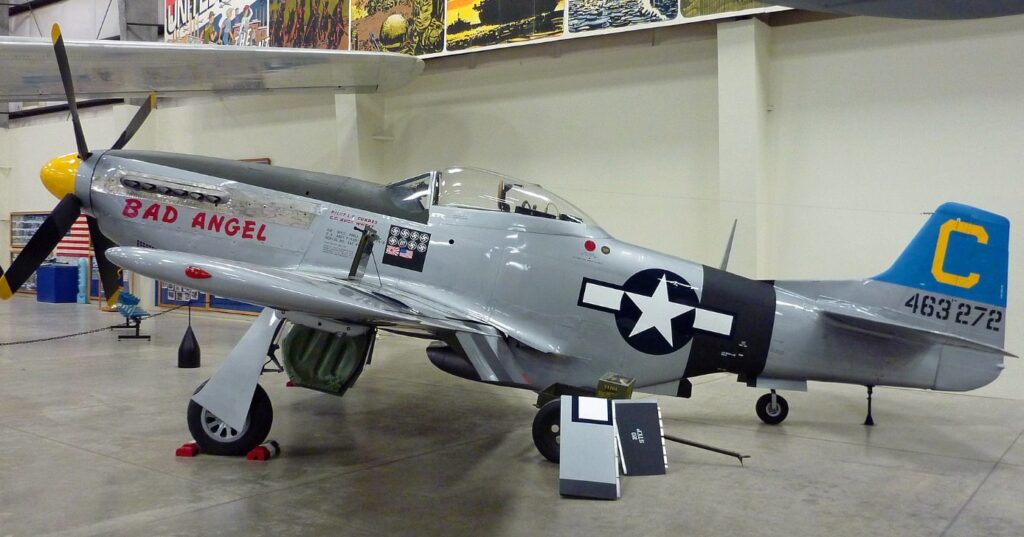
He could’ve stayed home after that. But Curdes volunteered to return to duty, this time in the Pacific, flying the legendary P-51 Mustang. His new plane bore the name “Bad Angel” and, soon, a tally of Axis kills across three theaters: Germany, Italy, and Japan. He was one of just three American pilots to achieve this rare trifecta.
The Bizarre Mission Over Batan Island
On February 10, 1945, Curdes and his squadron were flying a routine mission when they noticed an unexpected landing strip on the Japanese-held island of Batan, halfway between Taiwan and the Philippines. After a brief skirmish that damaged a fellow pilot’s plane, Curdes stayed behind to provide cover while others radioed for help.
Then, something strange happened: a U.S. C-47 transport plane appeared on approach to the airfield.
Curdes tried everything to get their attention—radio calls, warning passes, even firing across their flight path. But the crew didn’t turn away. They kept descending.
A Decision No Manual Covers
Lt. Curdes knew what would happen if that C-47 landed. The passengers and crew—American soldiers and two nurses—would be captured or killed by the Japanese. So, in one of the most extraordinary moments of WWII aviation history, he did the only thing left to do:
He shot out both engines of the U.S. aircraft.
The transport ditched in the sea, and the crew escaped into life rafts. Curdes dropped a message: “Island in enemy hands.” He radioed for rescue and circled overhead as long as his fuel allowed, protecting the downed crew until he had to return to base. The stranded Americans were recovered safely the next day.
The Aftermath—and a Bit of Romance
The rescued passengers included one of the nurses Curdes had dated previously. (Though legends say she became his wife, that part’s not true—just wartime folklore.)
Still, Curdes was celebrated for his judgment. He was awarded the Air Medal and the Distinguished Flying Cross. And on the fuselage of the “Bad Angel,” alongside symbols for German, Italian, and Japanese planes—was a new icon: a U.S. flag.
It marked the only known instance of an American pilot shooting down a U.S. aircraft intentionally… to save lives.
Why This Story Still Matters
Stories like that of Lt. Louis Curdes remind us that real heroism doesn’t always follow the rules. Sometimes, leadership means trusting your instincts when doctrine fails you. Sometimes, it means making the hardest call.
Further Reading & Sources:
With Great Appreciation
This story was brought to light thanks entirely to the research and historical notes of Jack Gross, a dedicated volunteer at the National WWII Museum. Jack has written extensively about World War II and is often entrusted with guiding VIP guests through the museum’s archives and exhibits. We are deeply grateful for his work — this article is simply a retelling, shaped for narrative clarity, of the history he uncovered and preserved.
Let us know if you’ve heard other untold stories from WWII. The Unwritten Heroes series is just beginning.
Don’t Miss the Next Unwritten Hero
If this story moved you, we invite you to join our Inner Circle for Unwritten Heroes.
You’ll get email updates when we publish new WWII stories — real people, powerful moments, and voices worth remembering.
No spam. Just stories that deserve to be remembered.